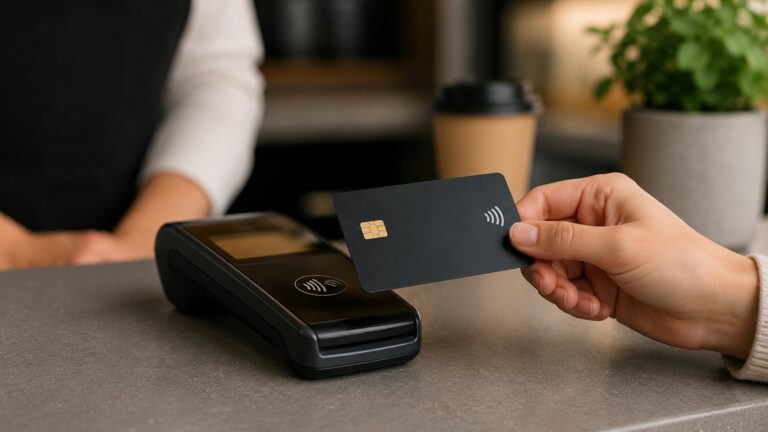
Credit cards have long been a staple of modern financial transactions, but the emergence of contactless credit cards is now transforming how consumers engage with payments. The convenience and speed offered by contactless cards are reshaping expectations and behaviors within retail, transportation, and various service industries.
At the core of this payment revolution lies Near Field Communication (NFC) technology. By enabling short-range wireless communication between a credit card and a payment terminal, NFC facilitates seamless exchanges of encrypted payment data. This advancement not only expedites checkout processes but also enhances security, as users never need to share their PIN codes or physically hand over their cards, minimizing exposure to potential fraud.
One of the critical aspects driving the widespread adoption of contactless credit cards is the heightened consumer demand for faster, more hygienic transaction options. During times when health safety is paramount, contactless payments reduce physical contact between merchants and customers, thus limiting the spread of germs.
This factor has accelerated acceptance across markets, with many merchants upgrading their point-of-sale systems to support contactless technology. Moreover, financial institutions and credit card issuers are heavily investing in contactless solutions to meet evolving customer preferences.
The issuance of contactless credit cards has seen exponential growth, with banks globally encouraging users to transition to this payment method. Coupled with mobile payment integrations through smartphones and wearable devices, the ecosystem of contactless transactions continues to expand, offering unparalleled convenience to users.
The Impact on Retail and Consumer Experience
Contactless credit cards are redefining the retail landscape by significantly reducing transaction times. Customers no longer need to fumble with cash or PIN entry, enabling faster lines and improved store throughput. This efficiency benefits both merchants and consumers, fostering a smoother shopping experience. Retailers adopting this technology report increased customer satisfaction and a decrease in abandoned purchases due to long wait times.
Furthermore, contactless payments encourage higher transaction volumes and average spending levels. The ease of use lowers barriers to purchase, making consumers more likely to buy impulsively or opt for convenience over cost. This shift challenges traditional retail marketing strategies, prompting businesses to rethink promotional tactics and loyalty programs to integrate with contactless payment data.
From a security standpoint, contactless credit cards employ dynamic cryptographic codes unique to each transaction, drastically lowering risks of data breaches and fraud. Unlike magnetic stripe cards, which transmit static information, contactless cards ensure that stolen data becomes useless for unauthorized transactions. This added layer of protection reassures consumers wary of digital payment vulnerabilities.
As a result, retailers can offer a trust-rich environment that encourages repeat business. The combination of speed, convenience, and security provided by contactless cards offers a compelling value proposition, enticing consumers to prioritize stores that support this payment method, thus driving competition and innovation within the retail sector.
Technological Advances Behind Contactless Credit Cards
The technological infrastructure supporting contactless credit cards is both robust and sophisticated. These cards integrate embedded antennas and secure microchips, enabling encrypted communication with point-of-sale terminals. Such design ensures compliance with global payment standards like EMV (Europay, MasterCard, and Visa), which govern interoperability and security frameworks essential for worldwide adoption.
Additionally, contactless credit cards incorporate tokenization technology, where actual card numbers are replaced with randomized tokens during transactions. This process shields sensitive financial details from interception and misuse. Tokenization, combined with biometric authentication methods in some cases, delivers multi-layered protection that significantly reduces fraud risks compared to traditional payment methods.
Payment networks have also optimized their systems to accommodate the rapid scaling of contactless transactions. Innovative algorithms and machine learning models monitor real-time transaction data to detect suspicious patterns, enabling immediate responses to potential breaches. This proactive approach creates a dynamic defense mechanism enhancing overall trust in contactless payment ecosystems.
Furthermore, chip manufacturers and financial service providers continuously update and refine card firmware and security protocols to stay ahead of emerging threats. Regular software enhancements ensure that contactless credit cards maintain their integrity against sophisticated cyberattacks, safeguarding users’ assets and confidence.
Global Adoption and Future Outlook
Across the globe, contactless credit cards have witnessed varied adoption rates influenced by regional infrastructure, regulatory environments, and consumer habits. In countries where public transport and retail sectors rapidly embraced the technology, widespread use has become standard, facilitating entire ecosystems of digital wallets and contactless-enabled devices. Such integration fosters financial inclusion and streamlines urban mobility.
Emerging markets benefit from contactless payments as well by leapfrogging traditional banking challenges. Governments and financial institutions collaborate to expand these services, expecting significant growth in the next decade.
Looking ahead to 2026, contactless credit cards will continue to evolve with enhanced features such as biometric security embedded directly into cards and AI-powered transaction verification.
These developments promise to further elevate security, personalization, and user experience. Additionally, the convergence with Internet of Things (IoT) devices will create new payment opportunities, enabling seamless, autonomous transactions in smart homes, vehicles, and wearable tech.
Ultimately, the revolution initiated by contactless credit cards exemplifies the broader shift toward faster, safer, and more convenient financial interactions. As technology and consumer expectations progress, this payment method will remain at the forefront, compelling businesses and regulators to innovate and adapt to an increasingly cashless world.